
In recent years, ESG (Environmental, Social, and Governance) has become the shorthand for responsible business. However, many organisations continue to treat the environment as just one component of ESG, but in practice it underpins both the social and governance dimensions. Without healthy ecosystems (clean water, stable climates, fertile soils) efforts to build social equity or strong governance cannot hold.
As climate change accelerates, resource scarcity intensifies, and inequality grows, organisations and communities need to rethink how they approach sustainability. It cannot be reduced to a compliance checklist. It must be the guiding principle shaping how we manage resources, design policies, and drive inclusive growth.
Why the Environment Comes First in ESG
Social stability, governance, and business performance are all shaped by the state of our natural environment. Without healthy ecosystems, the other two dimensions of ESG cannot stand.
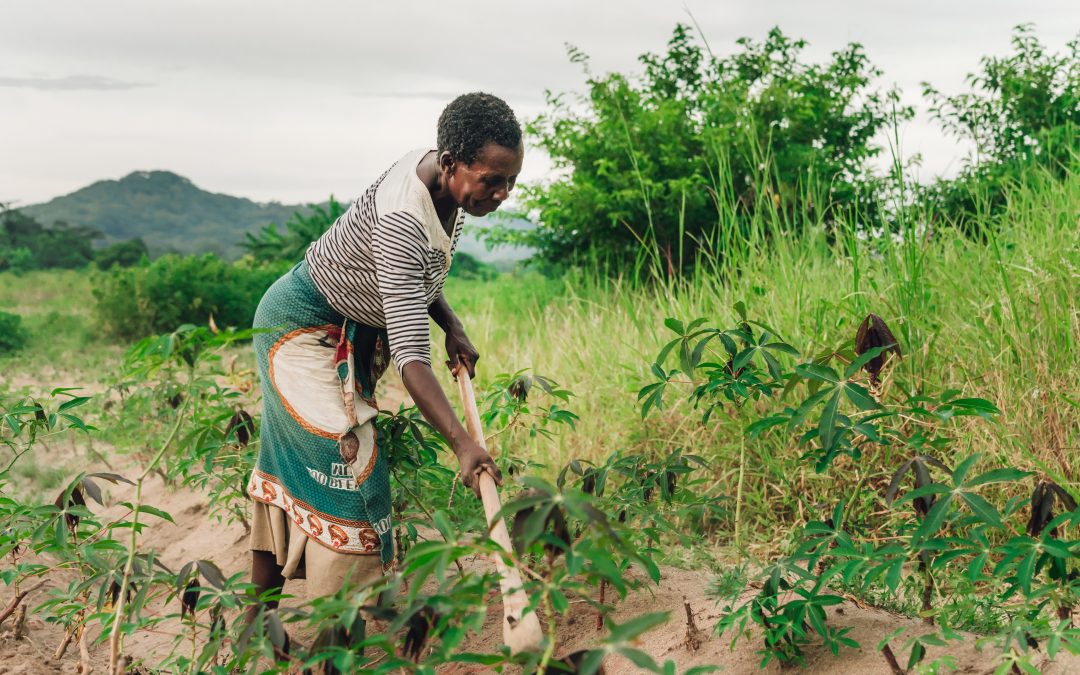
Social stability relies on environmental resilience. Food security, public health, and livelihoods are directly tied to the condition of natural systems. Communities cannot prosper if water sources are polluted, agricultural yields decline, or extreme weather displaces families. When the environment fails, the social fabric weakens.
Governance, too, is tested by environmental crises. Policies on renewable energy, the regulation of extractive industries, and disaster preparedness all determine whether organisations are seen as credible. Governance earns legitimacy only when it recognises ecological limits and manages them responsibly. Weak environmental governance leads to instability, conflict, and loss of public trust.

Business continuity is inseparable from environmental stewardship. Supply chains, investor confidence, and long-term growth all depend on a stable natural environment. Companies that neglect environmental risks expose themselves to financial shocks, reputational damage, and operational disruptions. Those that act responsibly build resilience and unlock new opportunities.
In short, the environment, which is the “E” in ESG is its foundation. The social and governance dimensions stand only because the environmental dimension supports them.
A Transdisciplinary Approach to Environmental Challenges
Therefore, the scale and urgency of today’s environmental challenges (climate change, biodiversity loss, and resource scarcity) demand a transdisciplinary approach that brings together science, communication, and strategy to generate knowledge, shape policy, and guide practice, and social equity.
This need is particularly more relevant in Africa, where communities are highly vulnerable to environmental shocks. The continent is warming faster than the global average, food systems are under strain from climate variability, and water scarcity is intensifying social and economic pressures. These challenges intersect with governance, trade, urbanisation, and social equity. Addressing them requires breaking down silos between disciplines and sectors.
A transdisciplinary approach provides that bridge. Science alone cannot drive action if it is not communicated clearly. Policy cannot succeed if it is disconnected from local realities. Business strategies cannot endure if they ignore ecological limits. Integrating knowledge across these domains, helps to design solutions that are technically sound, socially inclusive and economically viable.
My work sits at this intersection of environment, sustainability, and communication. With a background spanning forestry, environmental journalism, corporate communication, and business strategy, I help organisations and communities turn complex environmental challenges into clear, actionable strategies for building resilience. It involves turning data into insights, aligning local priorities with global sustainability frameworks, and creating space for dialogue among governments, businesses, and citizens.
In the African context, where the stakes are high and resources often limited, trans-disciplinarity approach ensures that climate adaptation plans consider both scientific forecasts and indigenous knowledge; that natural resource policies reflect ecological realities and community voices; and that development strategies pursue inclusive growth without undermining the ecosystems that sustain it.
How we come in
At Brand Power Consulting, we position sustainability as the compass of corporate strategy. We support organisations to embed sustainability into their core operations, communicate strategies that engage stakeholders, report performance through credible ESG frameworks, and build resilience by connecting science, policy, and business. Across sectors, from agriculture to energy and finance, we help partners thrive in a resource-constrained world by working within environmental limits to create opportunity and inclusive growth.
By Godwin Bonge Muhwezi, Environment and Sustainability Consultant at Brand Power Consulting Ltd.
e-mail: gmuhwezi@brandpowerug.com